Josh · Oct 19 – Nov 6

Josh · LinkedIn posts, Oct 19 – Nov 6

7 posts, Tue/Thu in weeks 1 and 3 and Mon/Wed/Fri in week 2. On Mark's days, repost Dean's latest post with a one-line take.

Week 1 · Oct 19

Tue 10/20JOSH~1,000 buildings: I told a prospect not to hire usText + cardDRAFTED
Post text + visuals
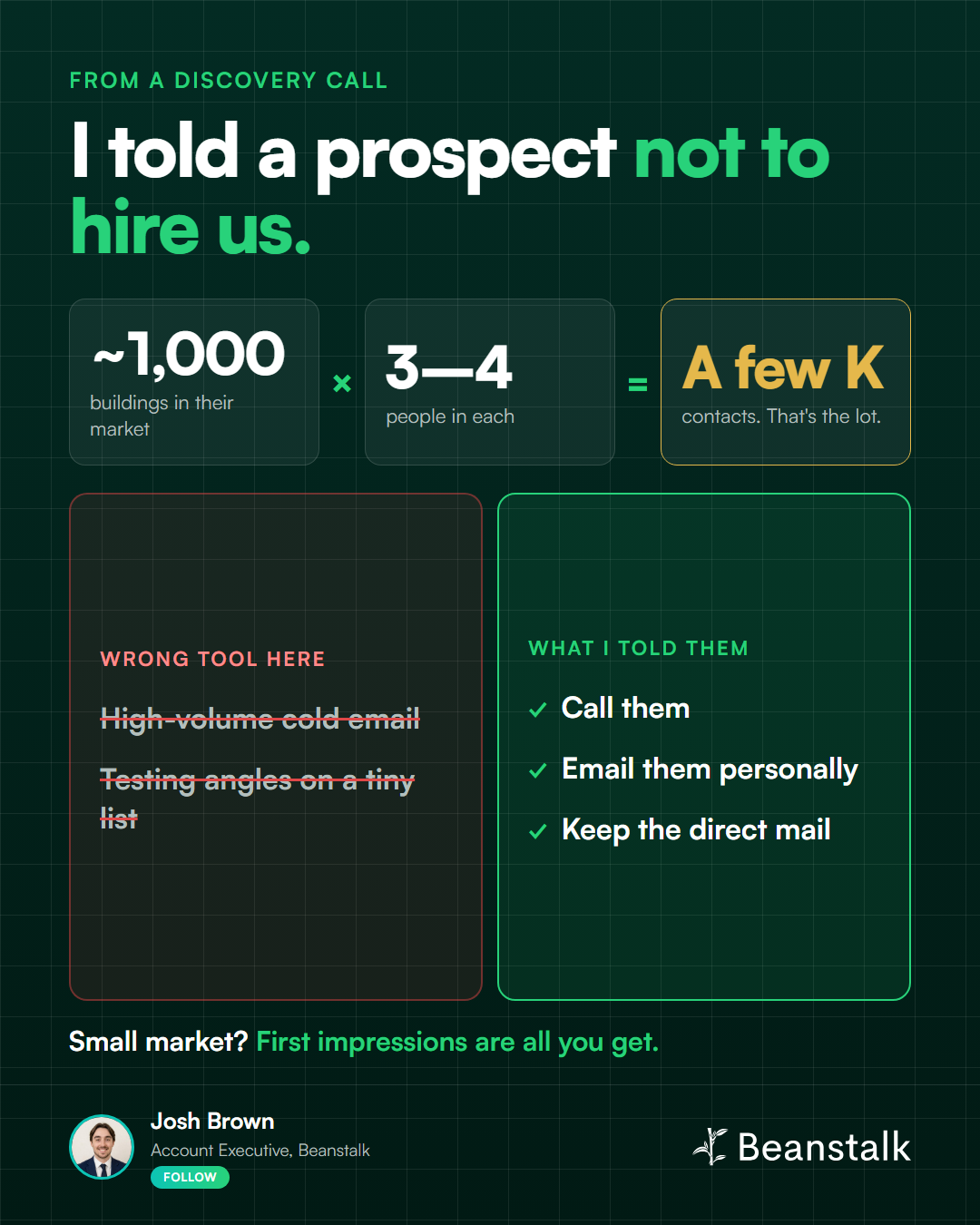
~1,000 buildings. 3 or 4 people in each. I told the prospect not to hire us.

a couple of weeks ago I had a call with a healthcare company that sells into senior living. Very old school market - you meet the executive director in the building or you don't really meet them at all.

Their whole addressable market was roughly 300 buildings per state, across three states. Call it a thousand buildings and a few thousand contacts, tops.

High volume cold email is built for big markets. You can test angles, burn through a few that don't land and learn fast because there's always more people to email.

With a list that small, first impressions are basically all you get.

So my honest advice was to pick up the phone and email them personally. One or two people working that list properly could get through it in a month or two, alongside the direct mail that was already getting them more interest than anything else.

Outbound campaigns might tick over in the background at some point. It just wasn't the thing to lead with.

The right channel comes from how many people you can actually sell to, not from whatever the agency on the call happens to sell.
Thu 10/22JOSH2 AI SDRs, both switched offText + cardDRAFTED
Post text + visuals
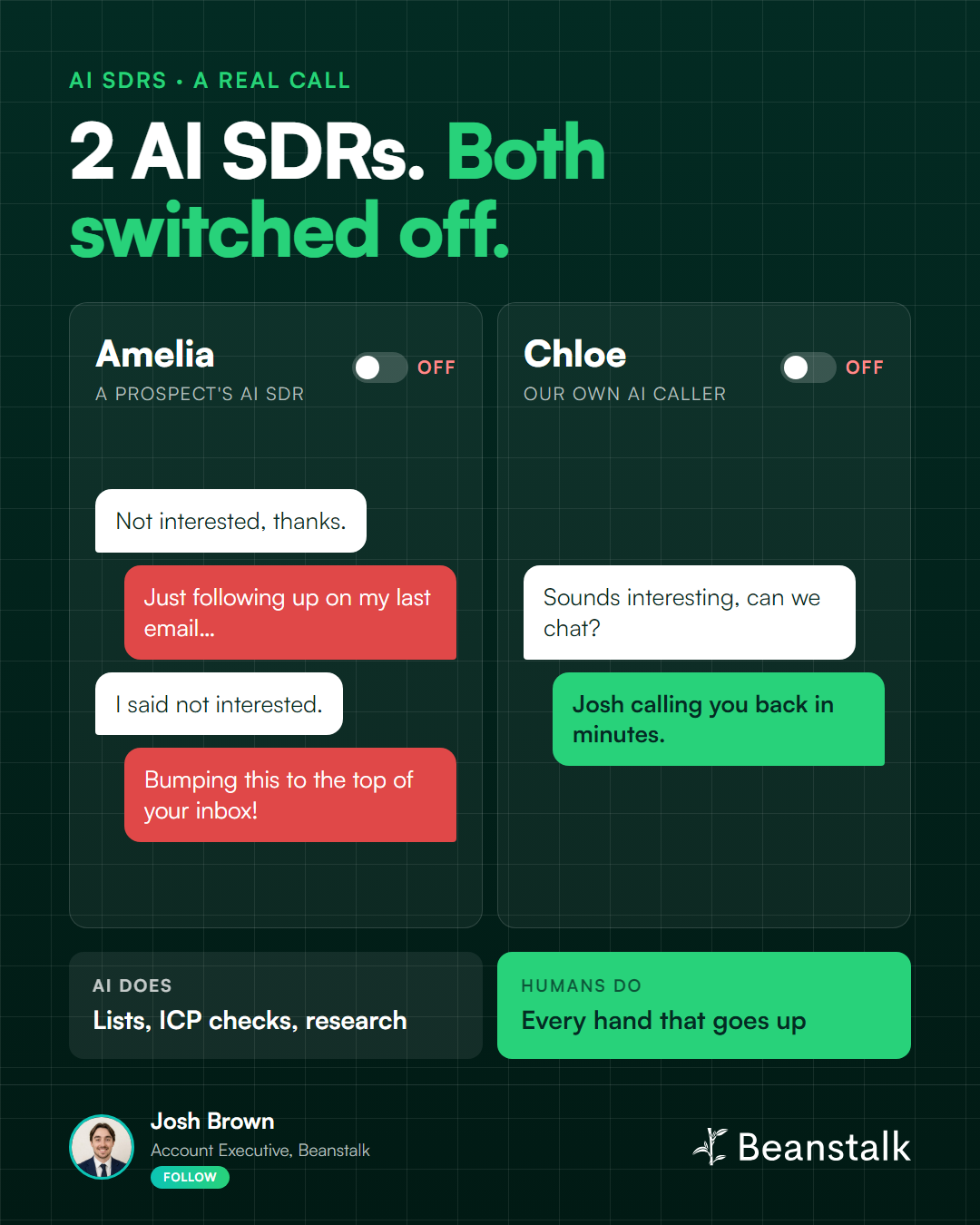
2 AI SDRs. 2 friendly names. Both switched off.

had a call a couple of weeks ago with a CEO whose company tried an AI SDR a few years back. They called her Amelia.

Amelia could send emails all day long. The problem was the replies. People said they weren't interested and she carried on emailing them anyway, which is a brilliant way to annoy your entire market.

Funnily enough we've got one sat in our own CRM. An AI caller called Chloe (no idea why they all get female names). I turned it off.

If someone replies to one of our campaigns and lands in the CRM, I don't want a bot ringing them. I want to ring them myself, within minutes, while they still remember why they replied.

AI is genuinely useful for the bits nobody should be doing by hand - building lists, checking every company against an ICP, finding a reason to reach out. We use it for all of that.

The moment a real person puts their hand up though, that part stays HUMAN.

Week 2 · Oct 26

Mon 10/26JOSH65% of CRM records wrong: old data, gold or garbage?LinkedIn pollLINKEDIN POLL · NO IMAGEDRAFTED
Post text + visuals
65% of the records in one client's CRM were wrong.

Phone numbers that didn't exist. Emails that bounced. Reps spending their days ringing people who'd moved on years ago.

a couple of weeks ago I had a call that reminded me of it. A manufacturer with decades of contacts sat in an old database that never made it across when they moved to HubSpot.

Sales say it's GOLD. IT say it's garbage. And it's been stuck in the middle ever since.

Honestly, both are probably right. There's real history in there, you just can't tell which bits are still true until someone checks every record.

Where does your team land?

SET UP IN LINKEDIN

LINKEDIN POLL (use LinkedIn's "Create a poll" option, no image)
Question: That old CRM data nobody has touched in years: gold or garbage?
Option 1: Gold, it just needs a clean
Option 2: Garbage, start fresh
Option 3: Bit of both
Option 4: We binned it years ago
Poll duration: 1 week
Wed 10/28JOSH5 questions to ask any outbound agencyCarousel (7 slides)DRAFTED
Post text + visuals
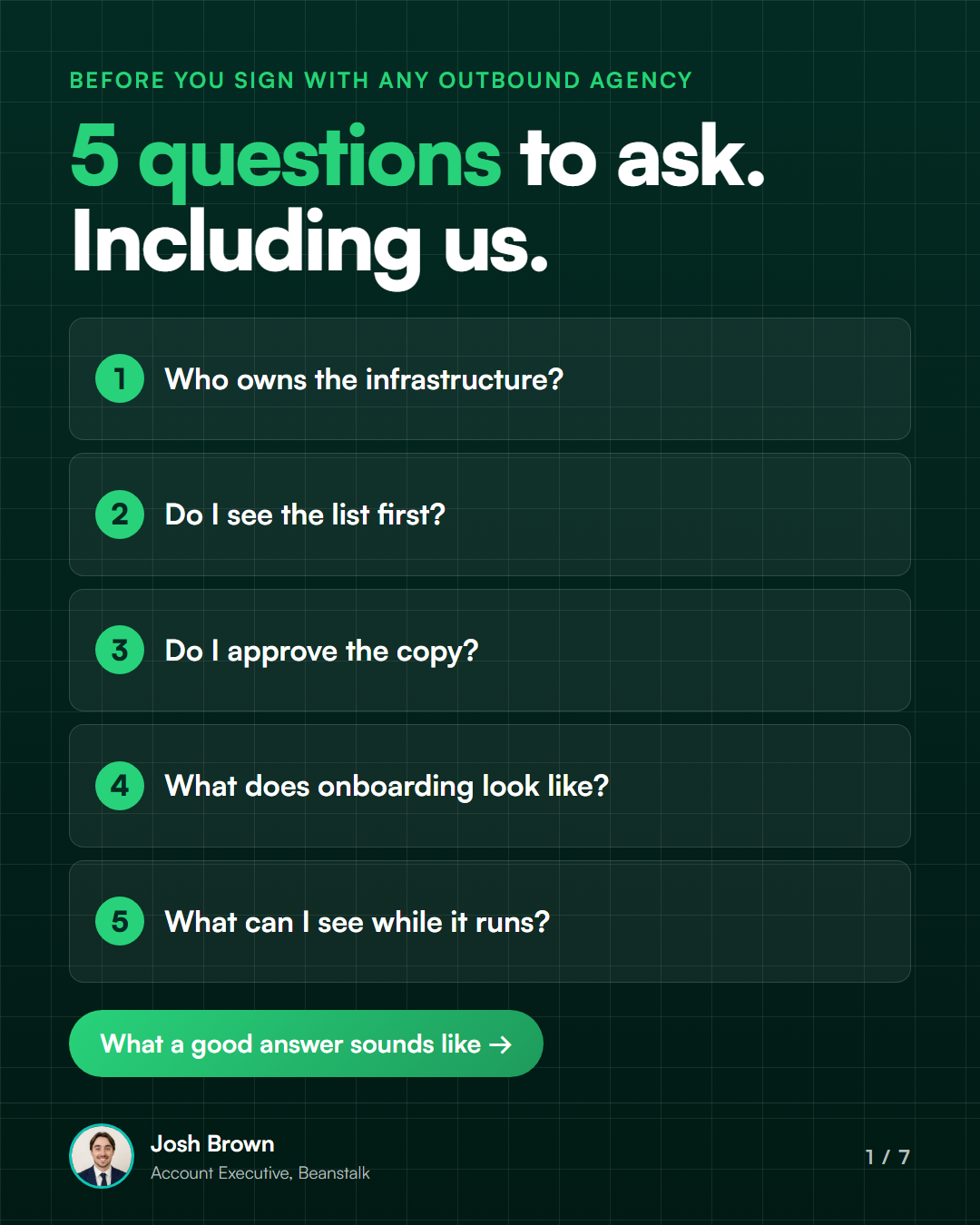
5 questions I'd ask any outbound agency before signing anything. Including us.

recently a prospect asked me straight out what actually makes us different from every other agency emailing them. Fair question, there's loads of us.

Rather than pitch, I gave them the questions I'd ask on every call they had lined up:

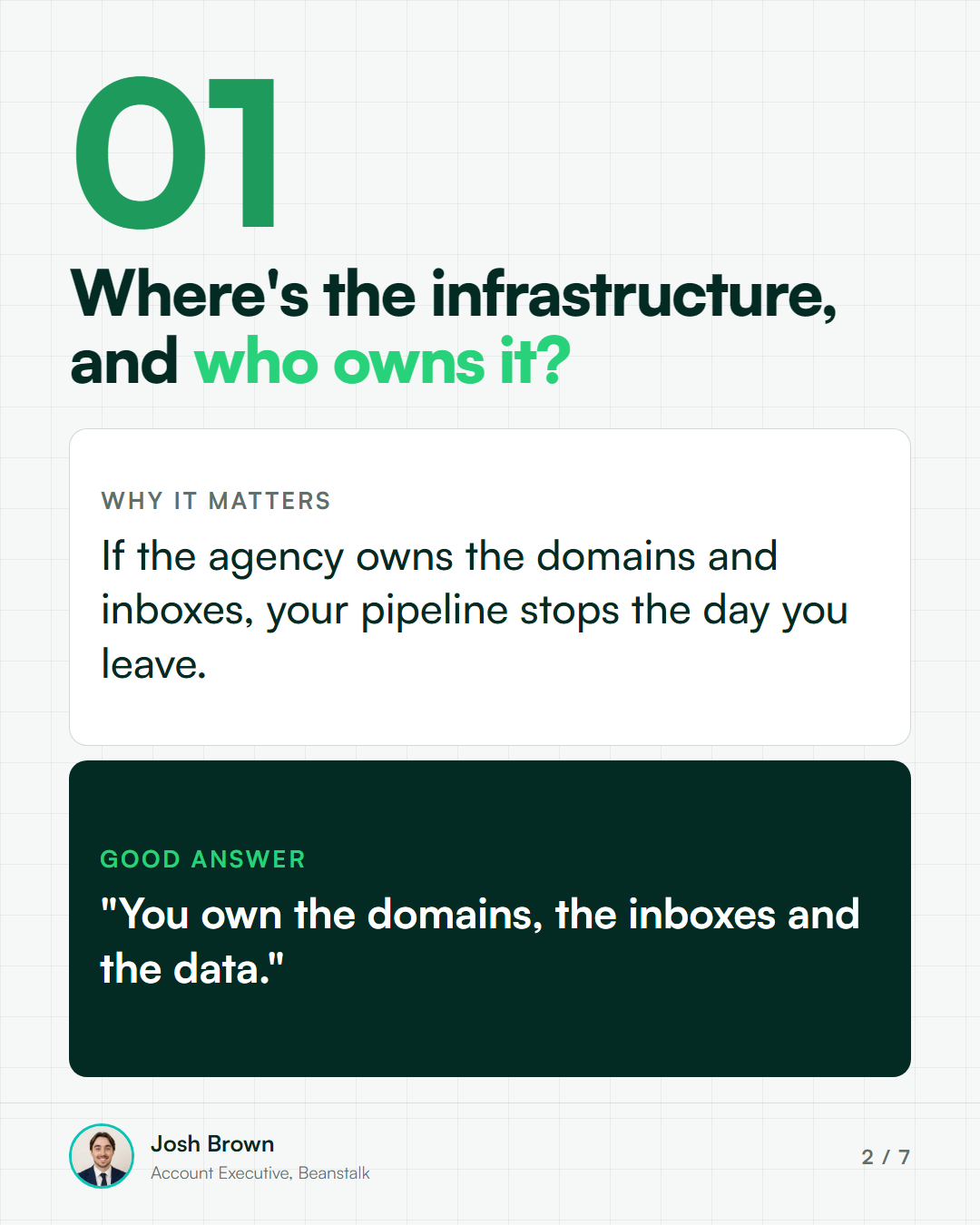
1. Where do you set up the sending infrastructure, and who owns it?
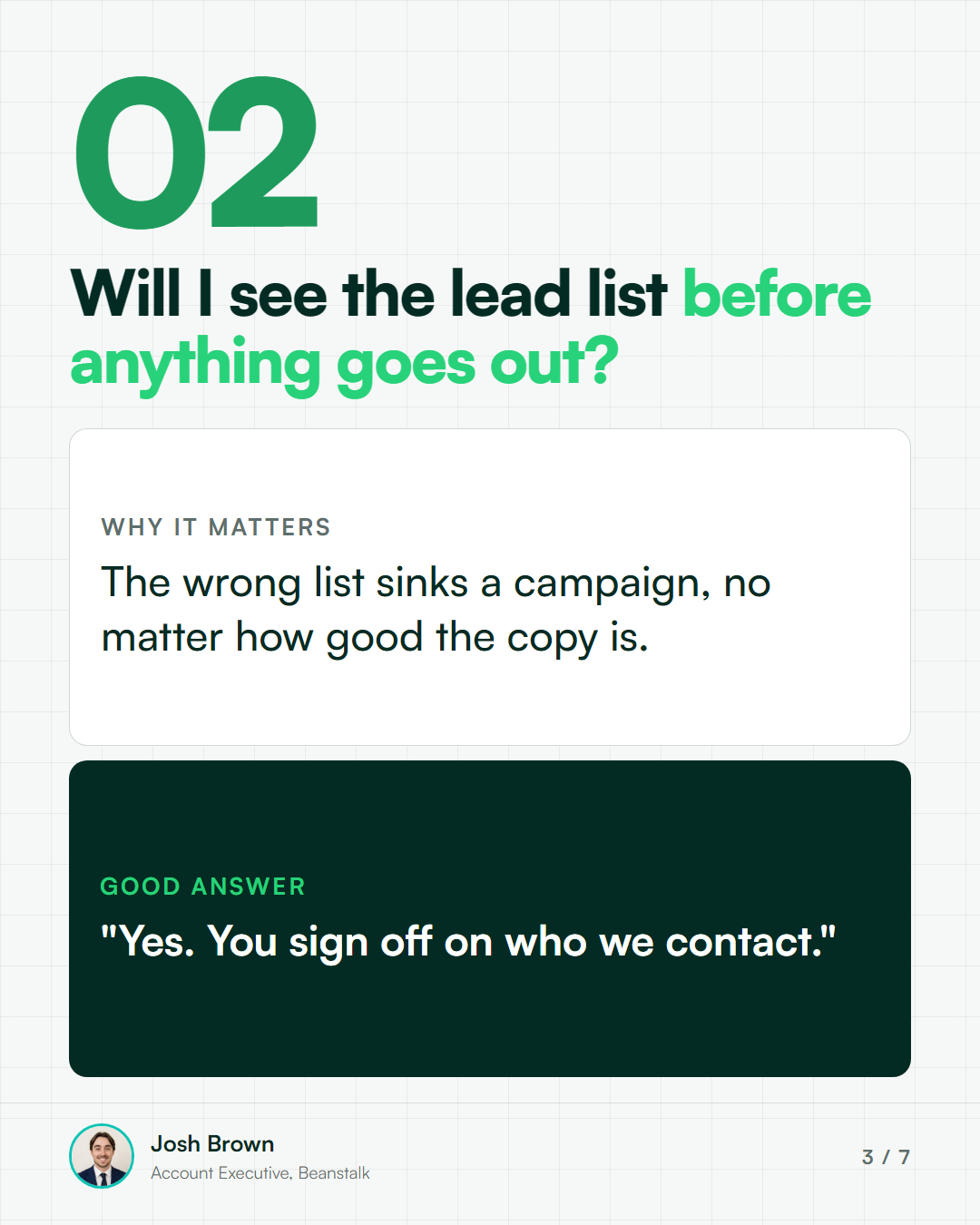
2. Will I see the lead list before anything goes out?
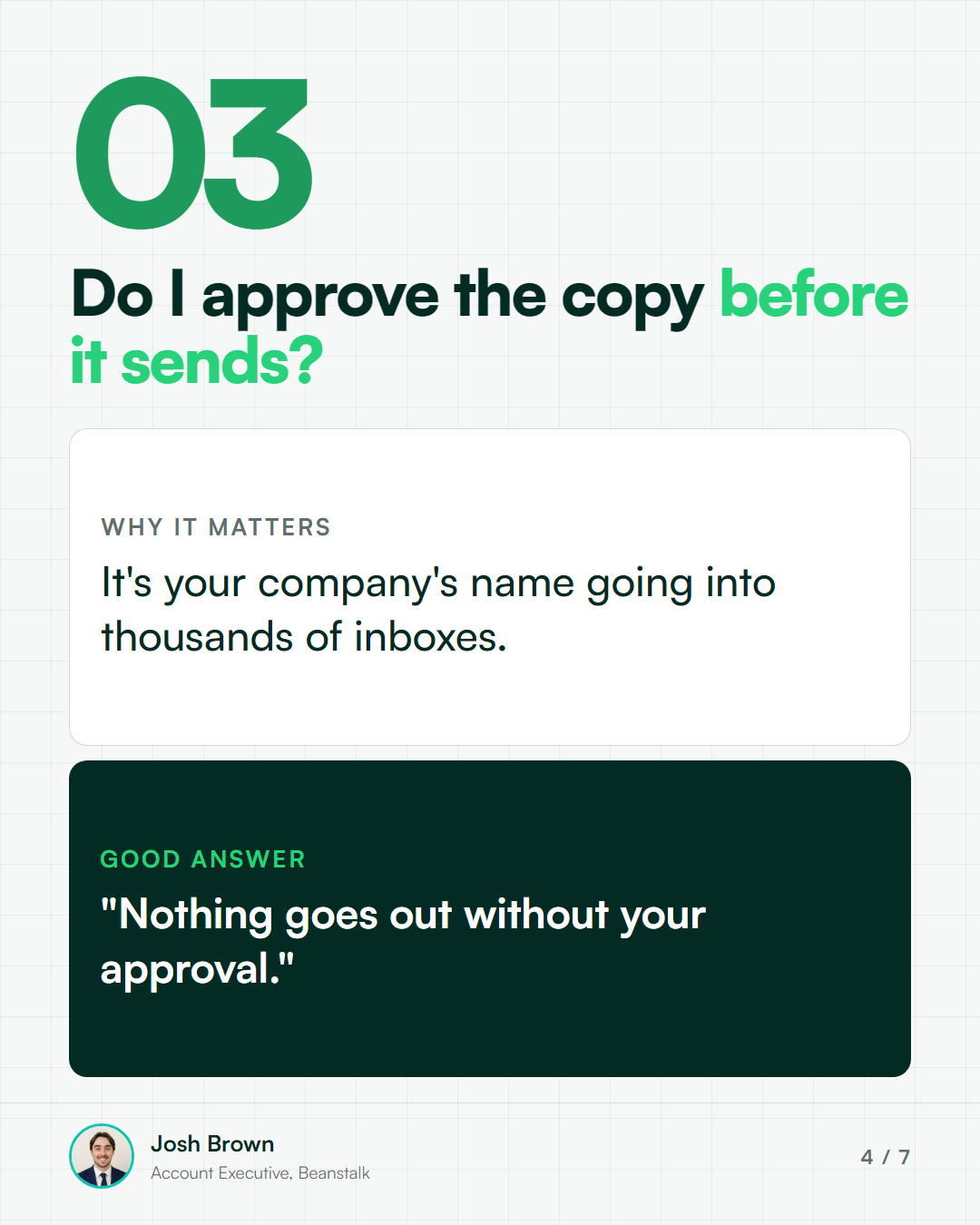
3. Do I approve the copy before it sends?
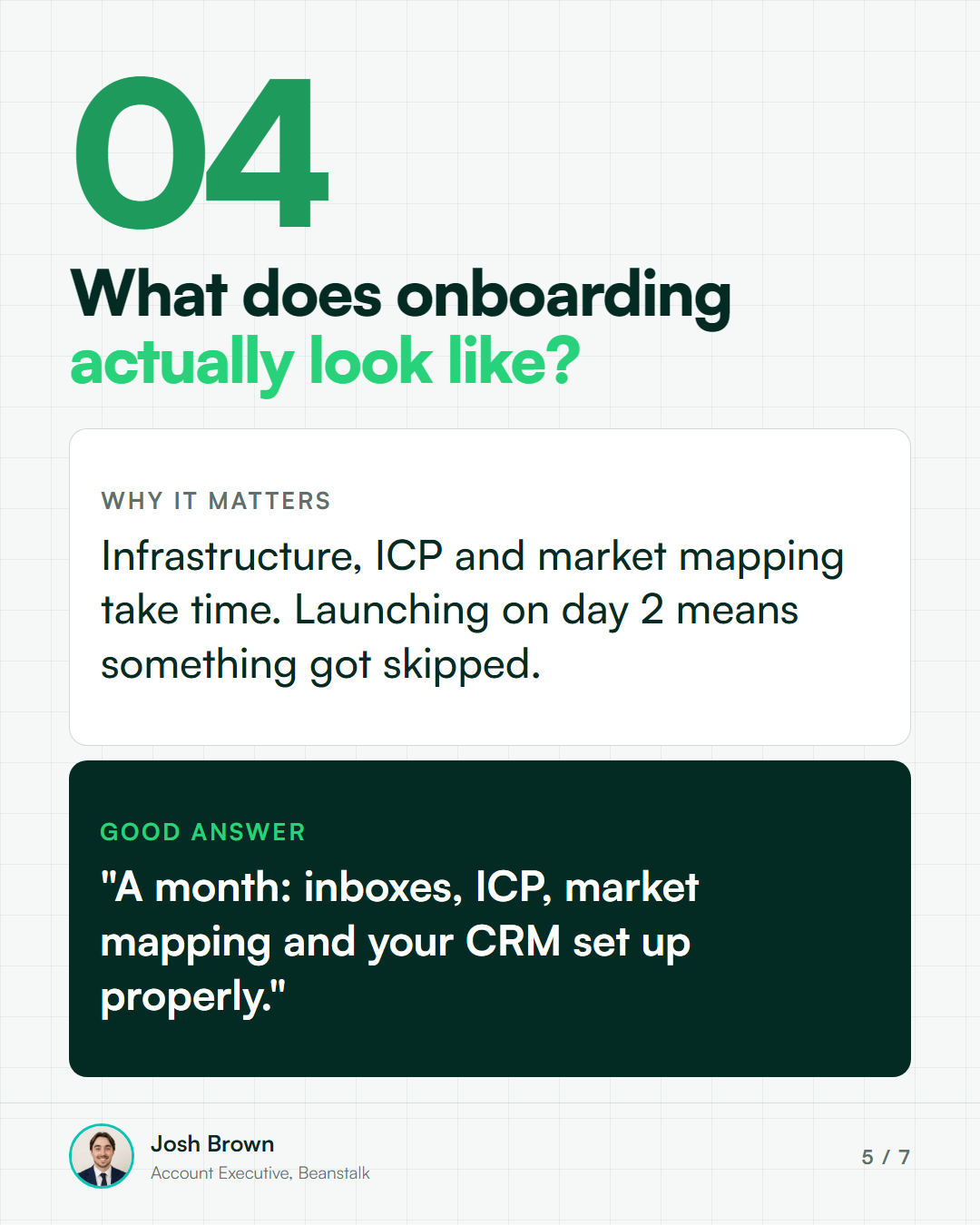
4. What does onboarding actually look like?
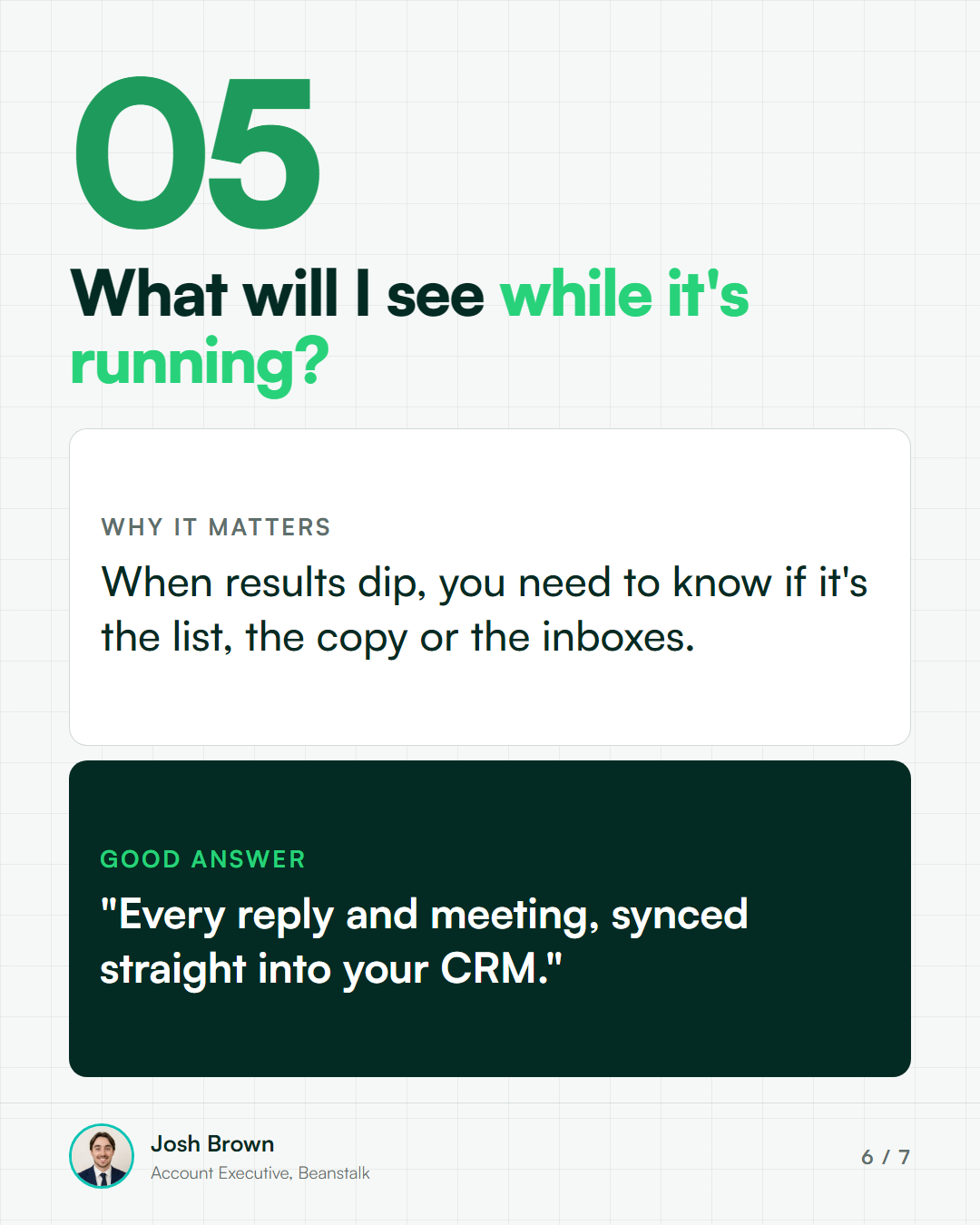
5. What will I be able to see while it's running?

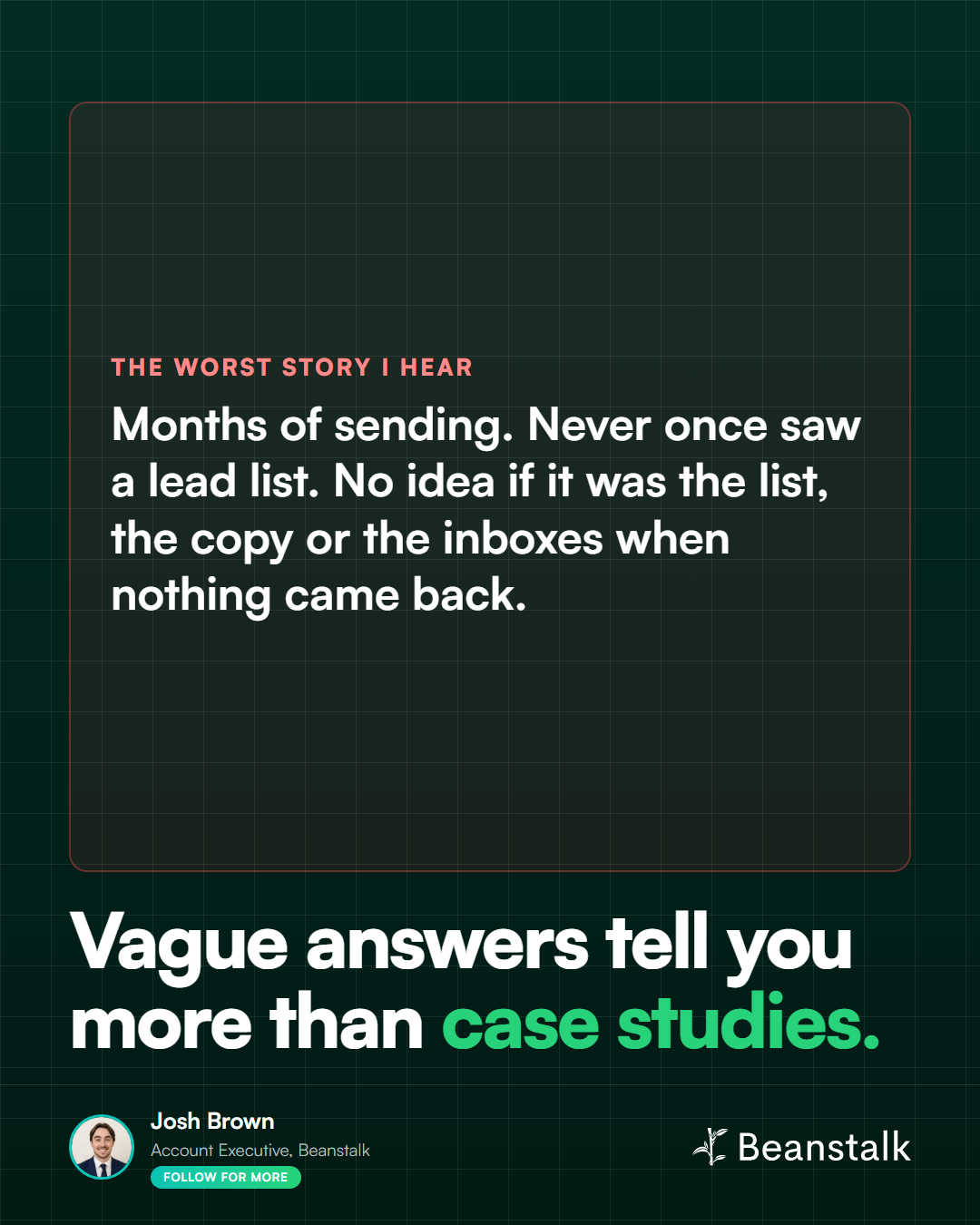
The worst stories I hear come from people whose agency had been sending for months and they'd never once seen a lead list. When the results didn't come, they had no idea if it was the list, the copy or the inboxes.

If an agency goes vague on any of these five, that tells you more than their case studies ever will.
Fri 10/30JOSH2pm to 10pm: selling to the US from near LiverpoolText + timeline cardDRAFTED
Post text + visuals
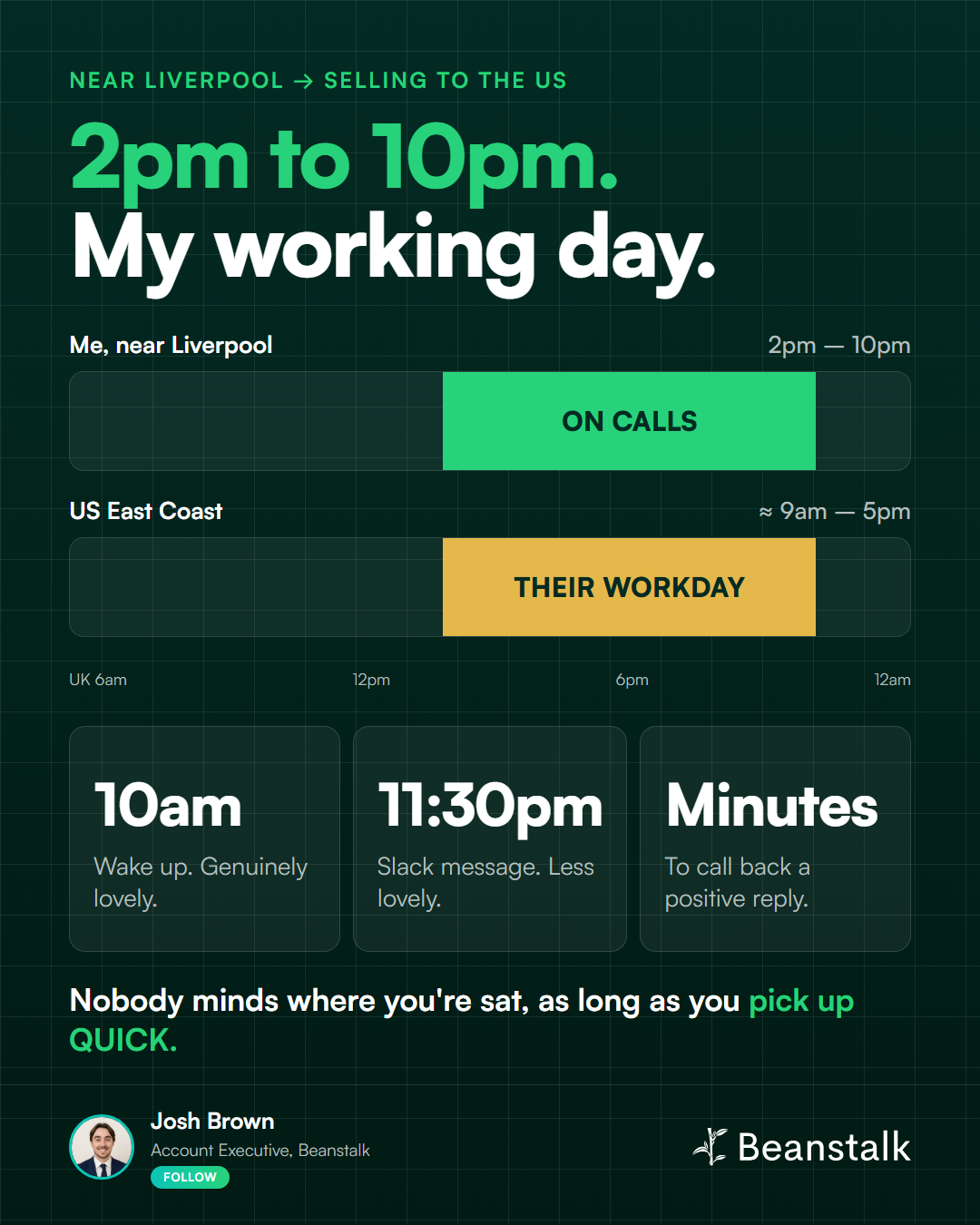
2pm to 10pm. That's my working day, from a small town near Liverpool, selling to companies in the US.

nearly every discovery call starts the same way. The prospect hears the accent and there's a little pause.

"Whereabouts are you based?"
"Near Liverpool."
"Oh. Okay."

We're a US company - our founder and head of sales are in Tampa - but the team is spread all over. A few of us in Europe, a few in Asia, Mark over in the States.

The hours took some getting used to. Waking up at 10 is lovely. Slack messages at half eleven at night are less lovely. Fridays are the only real casualty, when everyone around me is heading out and I'm still on calls.

But it means I'm on the same clock as the people I'm selling to. A positive reply that comes in at 3pm their time gets a call back in minutes, not the next morning.

Turns out nobody minds where you're sat, as long as you pick up QUICK.

Week 3 · Nov 2

Tue 11/3JOSH2 salespeople: 8 SDRs vs 2 + 2 + 1Text + comparison cardDRAFTED
Post text + visuals
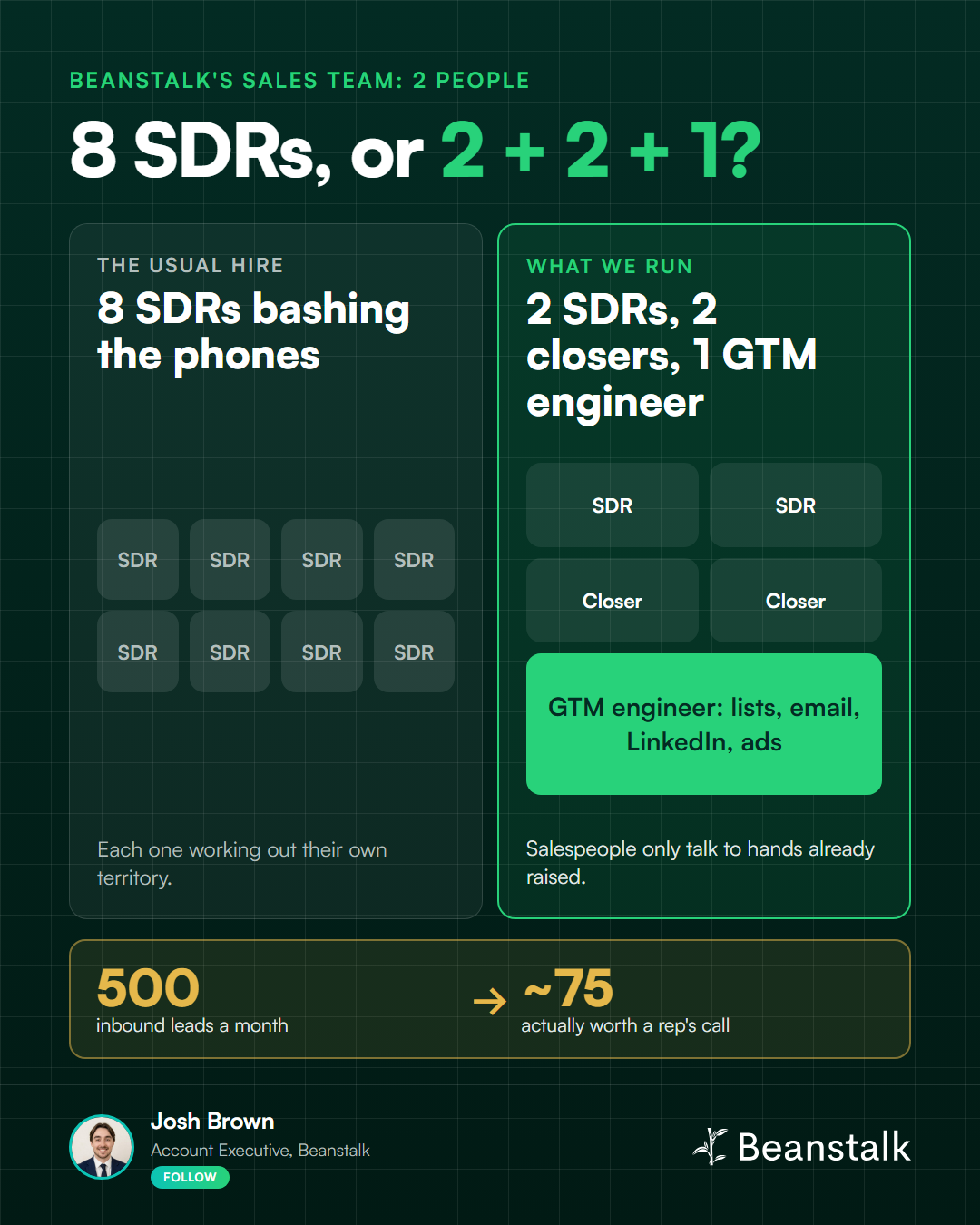
2 salespeople. That's the entire sales team at Beanstalk - me and Mark.

most people we speak to assume there's a floor of SDRs behind us. There isn't.

I was explaining this on a call recently with a CEO who's about to grow their sales team. Instead of hiring 8 SDRs to bash the phones and each figure out their own territory, you could have 2 SDRs, 2 people closing, and 1 go-to-market engineer running the machine behind them.

The GTM engineer builds the lists and runs the targeted email campaigns, the LinkedIn sequences and the ads. The salespeople only deal with people who've already put their hand up.

That's exactly how our pipeline works. I still do my own 20 to 30 dream accounts a week, but most of what lands in my Slack has already replied.

Same week, different call. A manufacturer with 15 reps getting around 500 inbound leads a month. About 75 are actually worth a call. That's a lot of rep hours spent finding the 75.

More people sorting through more noise doesn't fix that. A system that does the sorting first DOES.
Thu 11/5JOSH3 weeks: a fast no is a giftText + cardDRAFTED
Post text + visuals
3 weeks. That's how long a CEO asked me to wait before following up.

the other week I was on a call with a CEO who's speaking to a few agencies like us. Totally fair. Their marketing director was away on holiday, so they wanted time to go through it together.

I'd just said what I say on most calls - if you look at it and it's not relevant, just tell me, instead of me carrying on emailing you.

They didn't just agree. They promised. If it's a no, they'll tell me themselves.

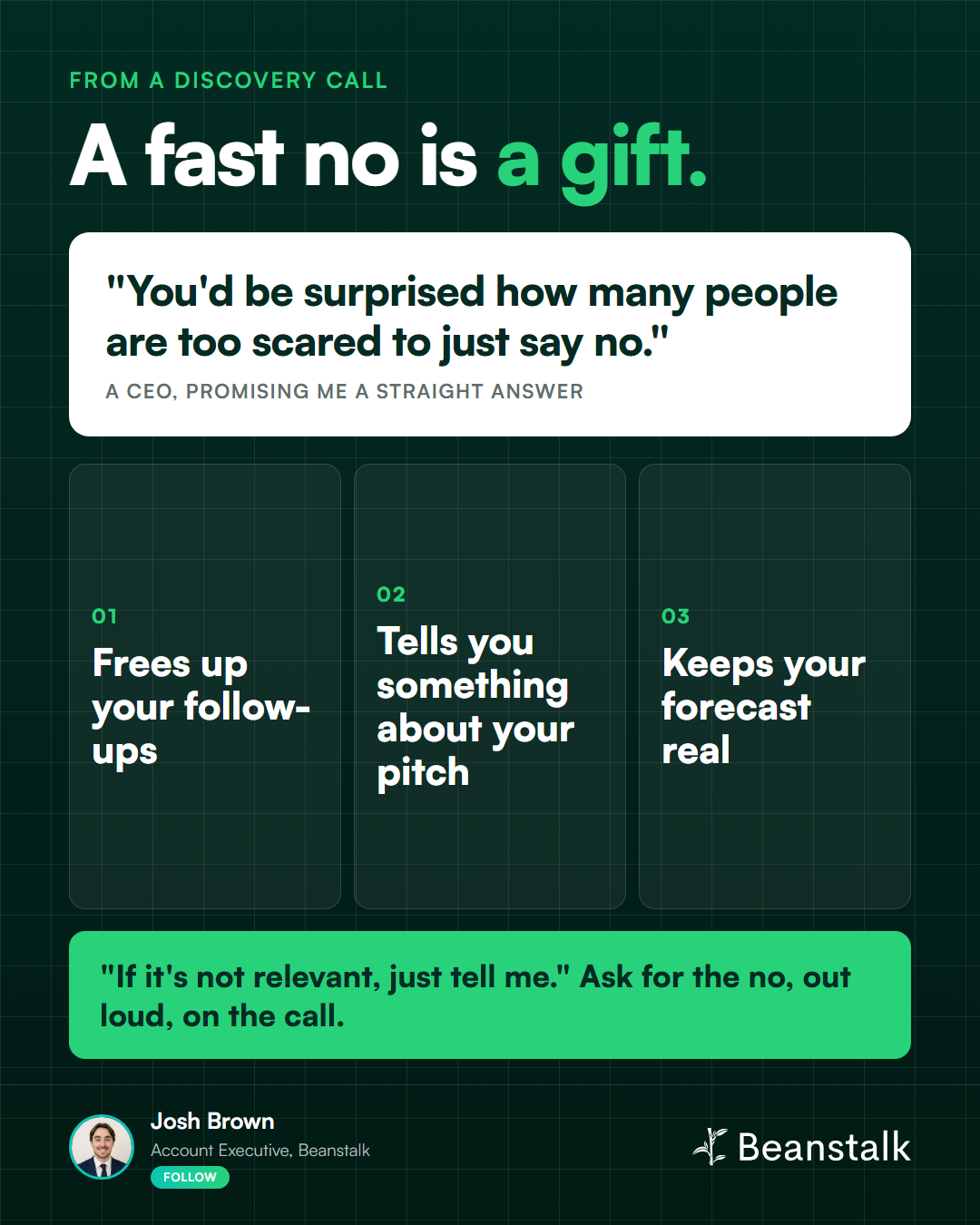
Then they said something I've thought about since: you'd be surprised how many people are too scared to just say no.

I wouldn't be surprised at all. A big chunk of sales is chasing people who made their decision weeks ago and never said so.

A fast no is one of the most useful things a prospect can give you. It frees up your follow-ups, it tells you something about your pitch, and it means the pipeline you're forecasting is actually REAL.

So ask for it. Out loud, on the call.